When 🔗Anthropic unveiled the Claude Mythos Preview, the cybersecurity community’s reaction swung rapidly from fascination to alarm. The revelations were striking: an autonomous model that could discover software flaws no human had catalogued, chain complex 32-step enterprise attacks in under half an hour, and execute tasks that traditionally took veteran penetration testers days to complete.
While the initial shockwave and hype of the ‘Mythos moment’ have cooled, the operational reality has settled in: AI-accelerated attacks are here to stay. 🔗The National Cyber Security Centre (NCSC) has consistently warned that AI will almost certainly increase the volume and impact of cyber attacks, fundamentally shifting the threat landscape.
With AI agents resolving complex cyber exploits at unprecedented rates and monthly disclosed vulnerabilities skyrocketing past 10,000, defenders face a fundamental problem: Attackers operate at machine speed, while corporate defence remains trapped at organisational speed.
A traditional patching window of 30 to 90 days is obsolete when exploit discovery happens in minutes and weaponisation takes hours. Closing this gap requires moving beyond legacy playbooks to build defensive programmes that match machine speed.
4 Practical Steps Organisations That Could Help Today
Step 1 Shift from ‘Mass Patching’ to Continuous Exposure Management Legacy vulnerability management, which relies on exporting massive spreadsheets of CVEs at month’s end, is mathematically impossible to sustain against autonomous discovery.
- Continuously inventory and map all external-facing and internal assets, misconfigurations, and software dependencies using modern exposure management platforms.
Action: Adopt Continuous Threat Exposure Management (CTEM) - Instead of attempting to patch everything simultaneously, correlate vulnerability findings with live threat intelligence. Focus immediate remediation on exploitable paths, actively targeted flaws, and internet-facing mission-critical workloads.
Action: Risk-Based Prioritisation.
Step 2 Close the Detection and Containment Window When autonomous AI models can navigate from initial compromise to privilege escalation without human intervention, manual alert review falls critically short.
- Leverage automated Security Orchestration, Automation, and Response (SOAR) workflows to instantly isolate compromised hosts, revoke session tokens, and block malicious IPs before lateral movement takes hold.
Action: Implement Machine-Speed Triage & SOAR - Enforce a strict Zero Trust architecture, strong credential hygiene, and least-privilege access to choke off automated lateral-movement pathways.
Action: Tighten Identity and Access Controls
Step 3 Fortify Defences Against Agentic & Prompt-Injection Phishing Phishing is no longer limited to misspelt emails. Attackers use generative AI and prompt-injection vectors to build hyper-targeted, context-aware social engineering campaigns that bypass email gateways and dupe finance or HR personnel.
- Supplement perimeter filtering with multi-person authorisation workflows for all critical financial or operational transactions.
Action: Implement AI-Resistant Controls - Update simulations to expose staff to AI-generated spear-phishing, deepfake impersonations, and credential-harvesting lures.
Action: Adaptive Security Awareness
Step 4 Deploy ‘AI Against AI’ Across the Defensive Pipeline As programmes like Anthropic’s Project Glasswing have demonstrated, defensive engineering can harness the same models to pre-empt attackers.
- Integrate AI security tools into CI/CD pipelines to inspect source code, flag zero-day patterns, and propose verified patches before software ships.
Action: Automate Code Auditing & Patch Generation - Regularly stress-test environments with autonomous penetration-testing simulations to uncover exploit chains before malicious actors can exploit them.
Action: Automated Red Teaming
Operationalising Defence with the CrowdStrike Falcon® Platform
To execute this defensive strategy, organisations must replace fragmented point tools with an integrated, AI-native platform. The table below outlines how each defensive step maps directly to the 🔗CrowdStrike Falcon® architecture:
| Defensive Step | CrowdStrike Technology Module | Functional Capability & Impact |
| 1. Continuous Exposure Management | Falcon Exposure Management & Falcon Spotlight™ | Continuous, scan-less vulnerability management. Leverages AI-driven risk scoring and Attack Path Analysis (APA) to correlate CVEs with asset criticality. |
| 2. Machine-Speed Containment | Falcon Fusion SOAR & Falcon Next-Gen SIEM | Ingests enterprise telemetry to run automated response playbooks that isolate hosts, revoke sessions, and sever lateral movement pathways. |
| 3. Identity Defence & Anti-Phishing | Falcon Identity Protection (ITDR) & Falcon Adversary OverWatch | Enforces real-time conditional access, halts credential abuse from prompt-injection compromises, and provides 24/7 human-in-the-loop adversary hunting. |
| 4. ‘AI Against AI’ Hardening | Charlotte AI™ & Falcon Cloud Security (CNAPP) | Provides generative AI analyst acceleration for rapid triage while continuously auditing code-to-cloud pipelines for misconfigurations and zero-day risks. |
Bridging the Gap with Mondas Professional Services
Moving from reactive patching to an AI-ready defensive posture requires specialised strategy, experienced governance, and modern tooling. Many organisations lack the internal bandwidth and senior cyber leadership necessary to orchestrate this transformation.
This is where Mondas Professional Services steps in to bridge the gap:
- Mondas provides dedicated Virtual Chief Information Security Officer (vCISO) services to translate machine-speed threat intelligence into executive-level risk management and tailored roadmaps.
Solution: Senior-led vCISO Advisory - Mondas helps enterprises consolidate legacy security products onto the unified Falcon platform, ensuring optimal single-agent coverage across hybrid, on-premises, and multi-cloud estates.
Solution: Architecture & CrowdStrike Deployment - Mondas consultants conduct thorough risk assessments and configure tailored Falcon Fusion automation playbooks, helping organisations achieve proactive resilience without disrupting operations.
Solution: Exposure Management & SOAR Playbook Engineering
The lesson of Claude Mythos is clear, cyber defence can no longer run on human-paced schedules. Staying resilient requires matching the speed, precision, and automation of modern adversaries.
If your organisation is struggling to keep pace with the rapid evolution of AI-driven threats outlined in this article, Mondas specialises in modernising cyber defences. Contact our team today to discuss how we can secure your infrastructure.
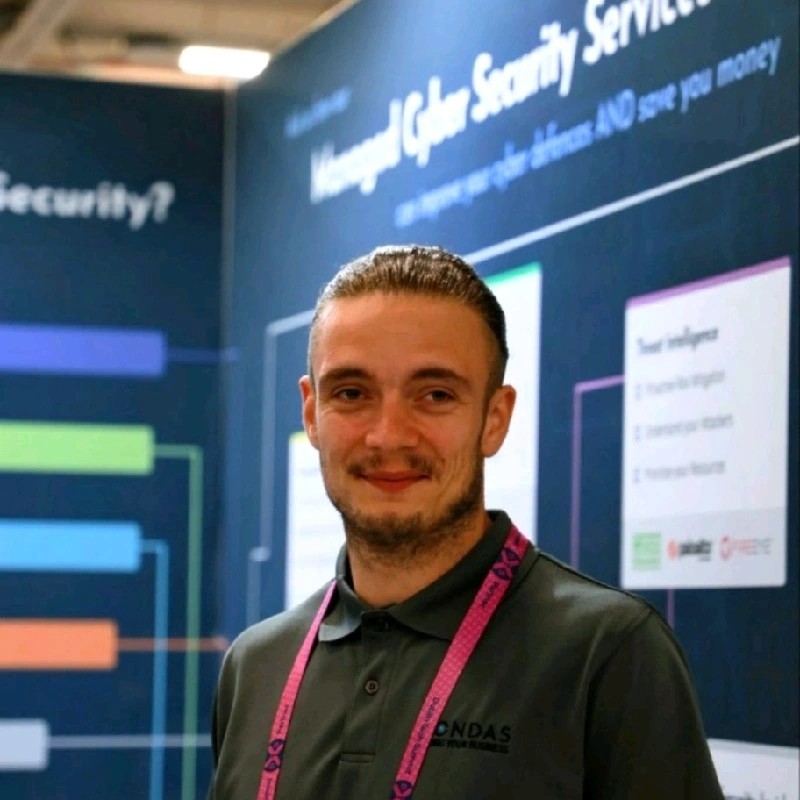
Article brought to you by Lance Nevill Cyber Security Director 🔗linkedin.com/in/lancenevill
Article First Published 29 October 2026